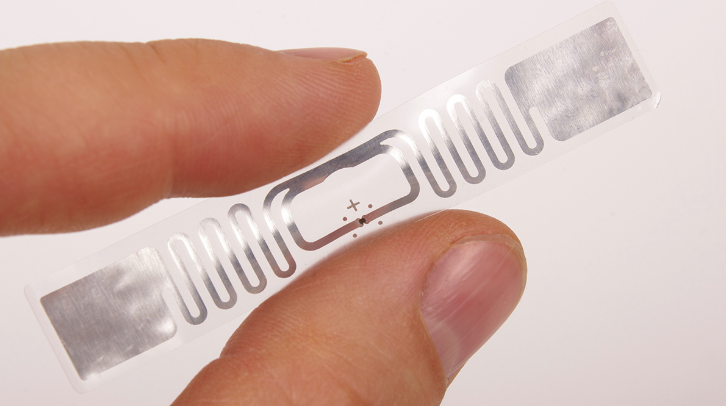

Ultra-miniature flexible circuits are among the most sophisticated electronic devices manufactured today, combining extreme miniaturization with exceptional reliability and performance. At Cirtec Medical, we produce flex circuits with feature sizes as small as 3 to 10 microns, enabling designs that push the boundaries of what is possible. Some of our circuits are flexible enough to wrap around a pencil, while others are engineered to withstand demanding mechanical stresses or deliver fault-free performance for years in critical applications such as implantable medical devices.
Our ultra-miniature flex circuits can be manufactured with six or more layers, supporting increasingly complex electronic architectures within highly constrained form factors. While these circuits share a common foundation of advanced materials and precision manufacturing, no two applications have the same requirements. A design optimized for flexibility may not satisfy the demands of long-term implant reliability, and a circuit engineered for extreme durability may require a completely different construction and fabrication approach.
Because every application presents unique performance, environmental, and regulatory challenges, each circuit must be purpose-built. The design, materials, layer stack-up, and manufacturing process are carefully tailored to achieve the specific combination of electrical, mechanical, and reliability requirements needed for success.
How well your flex circuit meets its performance requirements depends on 5 key factors:
Start Early: Why Manufacturing Collaboration Drives Success
Consulting with your manufacturing partner early in the product design cycle is the single best way to ensure a successful ultraminiature flex circuit. That’s because many of the decisions that most impact circuit performance actually occur well-before the product design arrives at the manufacturer’s doorstep. Product and process decisions are strongly interdependent. In particular, your partner will want to discuss the two next factors that help determine success: the circuits design characteristics and its mechanical and environmental requirements.
Design Decisions Shape Performance and Cost
Every ultra miniature circuit, either rigid or flex, presents significant fabrication challenges. These may include how to achieve the needed line (or trace) density, the target line width and height, the number of layers required, and the number and proximity of various features, such as coils and vias. Where features are located on the board may strongly impact performance factors, such as the circuit’s flexibility, its electrical impedance, and whether features can be fabricated as part of the imaging processor have to be cut out with a laser as a separate step, increases manufacturing cost, complexity and potentially risk.
Another factor in the design, and one that can also significantly impact cost, is the size and shape of the part (which affect how many devices can be nested on a single sheet of materials during fabrication before the sheets are then cut into individual devices.) Smaller and more symmetrical parts will nest better than larger odd-shaped parts, so unit costs will therefore also be lower.
Collaborating early in the design cycle with your manufacturing partner allows you to make design choices that enhance manufacturability as well the likelihood of meeting other challenges, like those discussed next.
Designing for Real-World Conditions
Designing a circuit that can be made with modern fabrication technology is one thing. Designing a circuit that can withstand the application’s mechanical and environmental challenges is another.
Among the challenges that should be discussed early with your fabrication partner are:
- How much will the circuit have to bend?
- How much tension will be applied in the application?
- How much shock and vibration must the circuit withstand?
- What about acceleration loads?
- Is the circuit subject to high humidity?
- What about contact with liquids?
These challenges must be taken into account when deciding how to deal with the design factors discussed, like line density and number of board layers, as well as more process-oriented decisions like which fabrication materials and process steps to use.
Why Advanced Manufacturing Capabilities Matter
Of course, the best design plans also require the best plant and equipment in order to carry out those plans. That includes state-of-the-art:
- CAD systems
- Photolithography masking and imaging
- Metal sputtering and plating (at an almost-atomic level)
- Advanced laser cutting
- Ultra pure manufacturing equipment and clean rooms
What’s even more important is the ability to operate this equipment to get the best results, which brings up the final key success factor:
Experience at the Edge of What’s Possible
Fabrication at this microscopic level often takes place on the edge of what is possible. Knowing how to take an extreme set of requirements and translate them into a production run that is both routine and cost effective takes highly specialized skills and years of experience, especially if one of the requirements is to meet a tight turnaround schedule driven by a fleeting market opportunity. In fact, that’s probably the best reason of all to collaborate early with your circuit fabrication partner — to win in your market.
Written by: Shawn Martin, Vice President and General Manager, Thin Film and Microelectronics