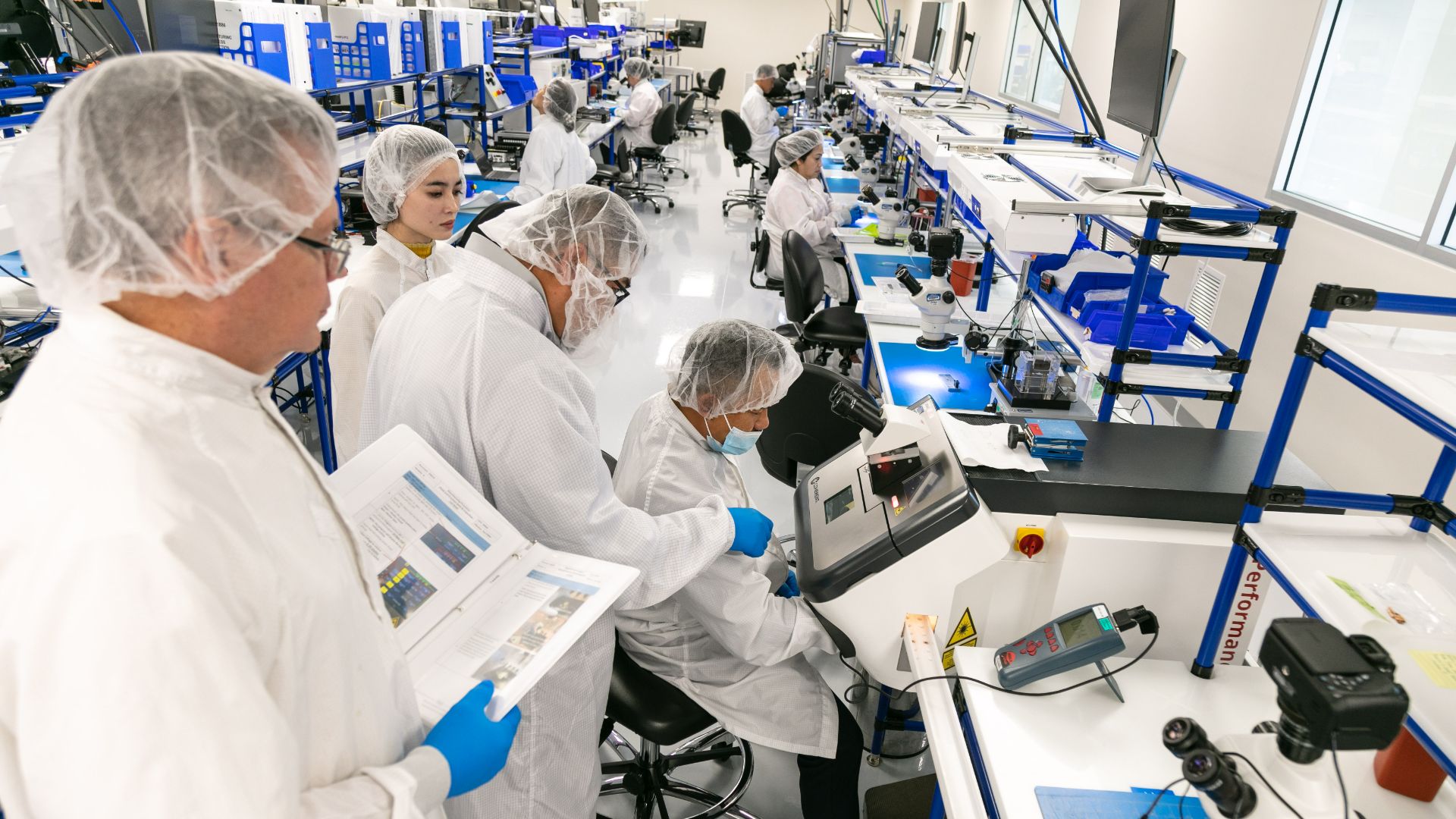

Quality is one of the most discussed, and sometimes misunderstood, concepts in engineering and manufacturing. Terms like Zero Defects, Six Sigma, and Total Quality Management are often associated with achieving better quality. But what does quality really mean, particularly when developing medical devices that must perform reliably and safely for years, sometimes decades, inside the human body?
The answer is more nuanced than simply designing the highest-performing product or manufacturing with zero defects. True quality requires a comprehensive approach that balances technical performance, reliability, manufacturability, cost, and delivery while ensuring that every product meets its intended requirements.
Quality Is More Than Performance
Design engineers often equate quality with achieving the best possible technical performance. Manufacturing teams may focus on yield and process consistency. Supply chain teams prioritize reliable delivery, while business teams consider cost and commercial viability.
Each of these perspectives is important.
Imagine a cell phone that would never break and would be the last phone you ever needed to purchase. That sounds like exceptional quality. But what if it cost $10 million, was the size of a small car, and took 35 years to deliver?
Clearly, durability alone does not define quality.
A high-quality product must meet its requirements across multiple dimensions. It must perform as intended, be manufactured consistently, meet reliability expectations, be available when needed, and deliver value at an acceptable cost.
In medical device development, these considerations are especially critical. A product may need to function flawlessly for a decade or more without software updates, reboots, charging, or maintenance. Achieving that level of reliability requires quality to be built into the design and development process from the beginning.
Quality Must Be Balanced with Cost and Scale
Quality improvement initiatives must also consider economics. The resources available to improve a product or process depend in part on manufacturing volume, product value, and the potential impact of the improvement.
Consider semiconductor manufacturing at different scales:
- High-volume production: A manufacturer producing 100 million chips annually at $10 per chip could generate $10 million in additional revenue from a 1% improvement in yield.
- Low-volume medical implant production: A manufacturer producing 1,000 chips annually at $100 per chip would generate just $1,000 from the same 1% yield improvement.
A manufacturer producing 1,000 chips annually at $100 per chip would generate just $1,000 from the same 1% yield improvement.
The opportunities and economics of quality improvement are fundamentally different.
This does not diminish the importance of quality in low-volume medical device manufacturing. Rather, it reinforces the need for thoughtful, risk-based decision-making. Improvement initiatives should be evaluated based on patient safety, product performance, regulatory requirements, operational risk, and the resources required to achieve meaningful results.
Quality is not about pursuing perfection at any cost. It is about ensuring that products consistently meet requirements while managing risk and delivering value.
Quality Is Built into the System
A robust Quality Management System (QMS) provides the foundation for consistent, reliable products and processes.
ISO 9001 establishes principles for quality management across industries, while ISO 13485 builds on these principles with requirements specific to medical device organizations. These standards provide a structured framework for establishing, maintaining, and continually improving quality processes.
At its core, an effective quality management system follows a straightforward principle:
Document what you do and do what you document.
Procedures define how activities are performed. Records provide objective evidence that those activities were completed as intended. Together, they create accountability, consistency, traceability, and a foundation for continuous improvement.
A quality system should not exist simply to satisfy an auditor. It should serve as an integral part of how an organization operates, makes decisions, manages risk, and delivers products.
Quality Audits: Demonstrating, Not Just Explaining
A quality audit evaluates both the systems an organization has established and evidence that those systems are being followed.
Typically, an audit involves two fundamental activities:
- Reviewing documented procedures to verify that they address applicable requirements.
- Evaluating objective evidence to confirm that processes are implemented and followed consistently.
The most effective audits are supported by clear documentation, organized records, and processes that are part of everyday operations.
When procedures are well defined and consistently followed, an organization can demonstrate compliance without relying on lengthy explanations or extensive audit preparation.
If an audit requires substantial verbal explanation to clarify how a process works, it may be an opportunity to improve the procedures themselves, the implementation of those procedures, or both.
A well-functioning quality system makes compliance demonstrable rather than dependent on individual knowledge or interpretation.
Quality in Medical Device Design Extends Beyond Technical Specifications
For complex medical technologies, defining product requirements is only the beginning.
A requirement such as “the chip shall consume less than 8.5nA” establishes a technical performance target. But quality also requires addressing the broader considerations necessary to deliver a reliable product.
These include:
- Design controls: Clearly defined requirements, design reviews, verification, validation, and documented design decisions.
- Manufacturing controls: Processes that consistently produce which products meet specifications.
- Supplier management: Qualified suppliers capable of delivering components and services that meet requirements.
- Testing and inspection: Appropriate methods to identify nonconforming products before they reach the customer or patient.
- Risk management: Systematic identification, evaluation, and mitigation of potential risks throughout the product lifecycle.
- Documentation and traceability: Objective evidence demonstrates that requirements have been met and processes remain controlled.
Yield is important, but it is not the only measure of success. The ability to identify defective products, prevent them from reaching patients, and demonstrate that controls are effective is equally critical.
A quality system must provide confidence not only that the product works, but also that the organization can consistently manufacture, test, and deliver it as intended.
Engineering Deliverables Are More Than the Product
One of the most important, and sometimes overlooked, concepts in quality is that engineering produces more than a physical device.
In semiconductor design, for example, engineering outputs include schematics, simulations, layouts, specifications, verification results, and other documentation used to manufacture and validate the final product.
These deliverables are essential to translating anengineering concept into a reliable, repeatable manufacturing process.
The same principle applies across medical device development. Design files, specifications, test protocols, validation reports, manufacturing instructions, and quality records are not administrative burdens separate from engineering. They are fundamental outputs of the engineering process.
High-quality documentation enables high-quality products.
The principle that “if it isn't documented, it didn't happen” is more than an audit adage. Documentation creates the objective evidence necessary to demonstrate that requirements were understood, decisions were justified, risks were evaluated, and processes were properly executed.
Without that evidence, even an excellent technical solution can be difficult to reproduce, verify, manufacture, or maintain overtime.
Quality Is Everyone's Responsibility
Quality is not owned exclusively by the Quality department. It is the responsibility of every function involved in designing, developing, manufacturing, and delivering a medical device.
Design engineers establish and document requirements. Manufacturing engineers develop controlled, repeatable processes. Supply chain teams manage supplier performance and continuity. Quality teams establish systems, oversee compliance, and help ensure that risks are appropriately managed.
These functions must work together to achieve a common objective: delivering safe, effective, and reliable products that consistently meet requirements.
In highly regulated industries such as medical devices, complexity is not an exemption from quality requirements. It is a reason to establish stronger systems, clearer documentation, and more disciplined processes.
Ultimately, quality is not simply about building a great product. It is about creating the systems, processes, and evidence that make it possible to deliver that product consistently and reliably.
At Cirtec Medical, quality is foundational to bringing medical technologies to life. Because the products we develop and manufacture are designed to improve and save lives, we believe quality must be embedded in every stage of the process, from initial concept and engineering through manufacturing and commercialization.
Written by: Rex Hales, Sr. Manager, IC Design Engineering